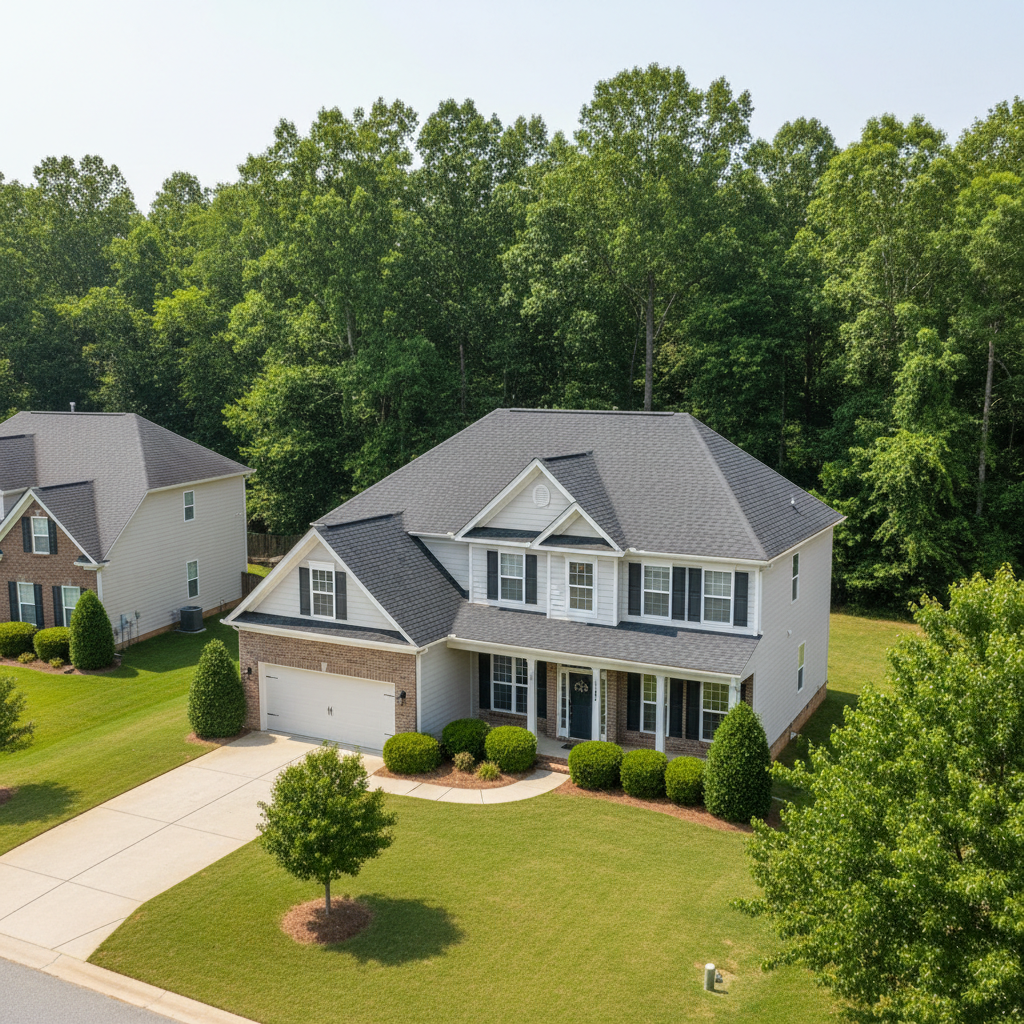
Watching a new home go up in areas like Heritage or out toward Hasentree is exciting. You see the slab poured, the framing go vertical, and then suddenly the crews show up to dry in the structure. But a new construction roof is not just about nailing down some shingles and calling it a day. Wake Forest Roofing Solutions has seen how local building pace and weather can impact these brand-new systems right out of the gate.
The Realities of Builder-Grade vs. Custom Builds
Many master-planned communities around town go up fast. When tract builders rush through framing and roofing phases, corners can sometimes get cut on flashing details, valley liners, and proper attic ventilation. If you are building custom, you have more control over upgraded architectural shingles and synthetic underlayments that stand up much better to our humid North Carolina summers and sudden afternoon downpours.
Why Local Conditions Matter
Our red clay and heavy pine coverage mean roofs here deal with a lot of organic debris and moisture retention. On new construction builds, making sure the roof decking has acclimated properly and that step flashing around chimneys or dormers is installed with precision prevents leaks before you even move in your furniture. Proper intake and exhaust venting are also important because a sealed-up modern house trapped with a hot attic will cook your shingles from the underside.
Getting an independent third-party roof check before your builder's one-year warranty expires is a smart step. Do not assume everything is flawless just because it is brand new. Catching a missed shingle tab or improperly sealed pipe boot early saves you headaches down the road.